
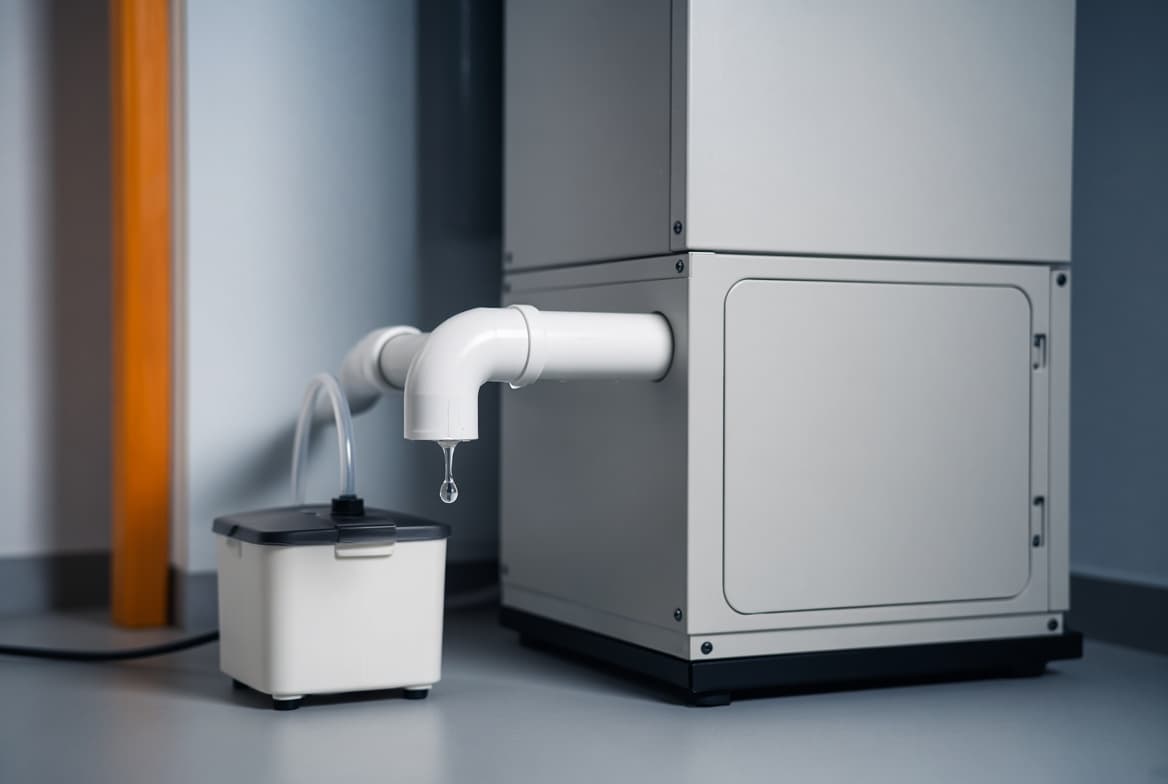
An AC refrigerant leak is a break anywhere in the sealed loop of tubing, coils and fittings that carries refrigerant between your indoor and outdoor units. Air conditioners don't use refrigerant up, so if a technician says your system is low, it is leaking. The fix is to find and repair the leak, then recharge the system to the correct amount. A recharge alone, without a repair, means paying for refrigerant again when it leaks out.
This guide covers the signs, where leaks usually are, how they're found, what an AC recharge and refrigerant typically cost, and when a leak is the signal to replace the system instead.
Signs of an AC Refrigerant Leak
| What you notice | Why it happens | Could also be | Check this first |
|---|---|---|---|
| Air feels cool, not cold | Less refrigerant absorbs less heat at the indoor coil | Dirty filter, dirty outdoor coil, thermostat setting | Replace the filter; hose off the outdoor coil gently |
| AC runs constantly and can't reach the setpoint | Reduced capacity | Undersized system on an extreme day, open windows, duct leaks | Note the indoor and outdoor temperatures |
| Ice on the indoor coil or the larger copper line outside | Low pressure drops the coil temperature below freezing | Clogged filter, blocked returns, weak blower | Turn cooling off, run the fan to thaw, then replace the filter |
| Hissing or bubbling near the indoor or outdoor unit | Refrigerant escaping through a hole or fitting | Normal noises from the metering device at startup | Listen with the system running and again a few minutes after it stops |
| Oily residue on a coil, valve or fitting | Refrigerant carries compressor oil out with it | Spilled oil from a past repair | Look at service valves, the indoor coil, and joints on the outdoor coil |
| Higher electric bills with no change in use | Longer run times to move the same heat | Dirty coils, aging equipment, rate increases | Compare bills to the same month last year |
| Water leaking indoors after the AC shuts off | A frozen coil melting faster than the drain pan can handle | Clogged condensate drain | Check the drain line and pan |
A dirty filter or dirty coil causes several of these same symptoms, so rule those out first. If cooling is still weak, work through AC not cooling before assuming refrigerant.
The temperature split is a useful screen. After the system runs for about 15 minutes, compare a thermometer at a return grille with one at a nearby supply register. Many systems show a drop of roughly 15 to 20 degrees Fahrenheit in normal humidity. A much smaller drop with good airflow points toward low refrigerant, but only gauge readings confirm it.
Is a Refrigerant Leak Dangerous?
A slow leak from a home system is mostly a damage risk to the equipment, not an immediate health emergency. Refrigerants are heavier than air, though, and a large release in a small closed room can displace oxygen. Liquid refrigerant can cause frostbite, and refrigerant drawn into a gas flame can break down into toxic gases. Newer R-454B and R-32 systems use mildly flammable refrigerants, which is why many include a leak sensor.
If you hear a loud hiss indoors or smell a sharp chemical odor, turn the system off, ventilate the room, keep flames and sparks away, and have it checked. Our Freon and AC refrigerant types guide covers safety by refrigerant.
Where AC Refrigerant Leaks Happen
| Location | Why it leaks | Typical fix |
|---|---|---|
| Indoor evaporator coil | Formicary corrosion (pinholes from household chemical vapors), vibration, condensate corrosion | Braze repair if it's one accessible spot; coil replacement for corrosion |
| Outdoor condenser coil | Corrosion from salt air, lawn chemicals or pet urine; tubing rubbing a support | Braze repair or coil replacement |
| Schrader valve cores at the service ports | Worn seals, missing caps | Replace the core and cap it; often a small repair |
| Service valves on the outdoor unit | Worn stem packing or seals | Tighten or replace the valve parts |
| Flare fittings (common on mini-splits) | Poorly made flares, overtightening, vibration | Remake the flare or replace the fitting |
| Copper line set | Rubbing on framing or sheet metal, damage during other work, kinks | Repair the section or replace the line set |
| Braze joints and return bends | Vibration and cracking over time | Rebraze the joint |
Indoor coil leaks are especially common. Our guide to evaporator coil leaks explains formicary corrosion and the repair-or-replace choice, and the outdoor condenser coil covers the outdoor side.
How Technicians Find a Refrigerant Leak
Finding the leak is often the hardest and longest part of the job. A good technician works from broad to specific:
- Pressure and temperature readings. Gauges plus superheat and subcooling measurements show whether the system is undercharged or has a different problem, such as a restriction.
- Visual inspection. Oil stains, damaged tubing and missing valve caps narrow the search.
- Electronic leak detector. A sniffer probe moved slowly along coils, joints and fittings alarms near refrigerant.
- Bubble solution. Applied to a suspect fitting or joint, it foams at the leak and confirms the exact spot.
- Nitrogen pressure test. If the leak hides, the technician recovers the refrigerant, pressurizes the system or one section with dry nitrogen, and watches for a pressure drop. Isolating the indoor coil, outdoor coil and line set one at a time tells them which part leaks.
- UV dye. Some technicians inject dye and look for it under UV light later. Some equipment manufacturers discourage additives, so ask before agreeing to dye in a newer system.
A very slow leak may not show up on the first visit. In that case, ask what the technician tested, what they ruled out, and whether a standing nitrogen test is the next step.
How to Recharge an AC (What a Proper Job Looks Like)
For a home central air system or heat pump, recharging is technician work. Here's what a correct recharge after a leak repair involves, so you can judge what you're paying for:
- Repair the leak. Braze the joint, replace the valve core, or replace the leaking part.
- Pressure test. Pressurize with dry nitrogen and confirm the system holds.
- Replace the filter drier if the system was opened, since moisture in the system damages the oil and compressor.
- Evacuate. Pull a deep vacuum and confirm it with a micron gauge to remove air and moisture.
- Charge by the manufacturer's method. Weigh in the charge listed on the data plate, adjusted for the line set length, or charge to the manufacturer's superheat or subcooling target.
- Verify. Check pressures, temperatures and the temperature split with the system running.
A "top off" skips most of that. The technician adds refrigerant until readings look right. That can make sense for a small leak that's been repaired at a valve core, but on its own it's a temporary fix.
If you searched "how to recharge AC" for a car, that's a different system and refrigerant. Car AC kits don't belong on a home unit.
AC Recharge Cost and Freon Cost
What you pay depends on the refrigerant, how much the system needs, and how much work it takes to find and fix the leak. Published cost guides from 2026 commonly list figures in these ranges. Treat them as national ballparks, not quotes:
| Refrigerant | Commonly quoted price per pound, installed | Notes |
|---|---|---|
| R-22 | About $90 to $150, sometimes higher | No new production since 2020; supply is reclaimed and stockpiled |
| R-410A | About $50 to $80 | Still available; supply shrinking under the HFC phasedown |
| R-454B | About $60 to $100 | Used in many new systems since 2025 |
Typical totals reported in those guides:
- Recharge only, a few pounds: often a few hundred dollars, commonly cited around $200 to $600, plus the service call.
- Leak search: sometimes included in the diagnostic fee, sometimes billed separately, especially if a nitrogen test is needed.
- Leak repair: from a small charge for a valve core to well over $1,000 when a coil or line set has to be replaced. See AC repair cost by part for other repairs.
- R-22 systems: commonly the most expensive to recharge, often running well beyond $1,000 for larger charges.
What moves the number:
- Pounds needed. The data plate lists the factory charge. A small top-off costs far less than a full charge after a major leak.
- Leak location. A valve core at the service port takes minutes; an attic coil or a line set inside a finished wall takes hours.
- Refrigerant type. R-22 costs the most per pound. Read more in R-22 refrigerant and R-410A refrigerant.
- Warranty and coverage. A manufacturer parts warranty may cover a leaking coil but not labor or refrigerant. Home warranty plans often cap refrigerant coverage, so read the terms in home warranty HVAC coverage.
Ask for a quote that separates the diagnostic fee, leak repair, pounds of refrigerant and price per pound.
Repair the Leak or Replace the System?
| Situation | Usually the better move |
|---|---|
| Small leak at a valve core, fitting or single joint | Repair and recharge |
| Leaking coil, system under about 10 years old, coil under warranty | Replace the coil; you pay labor and refrigerant |
| Second leak on a copper coil, or confirmed corrosion | Replace the coil, ideally with an aluminum one |
| R-22 system with a coil leak or repeated leaks | Replace the system |
| R-410A system 12 to 15 years old with a major leak out of warranty | Price the repair against a new system |
| Leak plus a failing compressor | Replace the system |
One fact few homeowners know: EPA's newer leak repair requirements, which took effect January 1, 2026, apply to appliances holding 15 pounds or more of HFC refrigerant and specifically exclude residential and light commercial air conditioners and heat pumps. No federal rule forces you to fix a leak in a home system. What you can't do is release refrigerant on purpose, and a technician working on your system must recover it rather than vent it. Whether a repair is worth it is a cost decision, and repeated top-offs are almost never the cheapest path over time.
If replacement comes up, newer systems use R-454B or R-32. See R-32 vs R-454B for how those compare.
What Homeowners Should Not Do
- Don't buy refrigerant or a recharge kit for your home system. Refrigerant for home air conditioners and heat pumps can only be sold to technicians certified under EPA Section 608 and their employers. Kits advertised online for home units sidestep that rule and don't make the job safe.
- Don't use car AC cans. They're exempt from the sales restriction only because they're meant for vehicles. They contain the wrong refrigerant for a home system and can contaminate the charge.
- Don't add a leak sealer. Many manufacturers discourage sealants, which can clog metering devices and complicate warranty claims.
- Don't use "R-22a" or other propane-based substitutes. EPA has warned these are flammable and not approved for existing home systems.
- Don't chip ice off a frozen coil. Turn cooling off and run the fan to thaw it. A screwdriver through a coil tube turns a leak into a coil replacement.
- Don't keep running a system that's freezing up. Low refrigerant and ice put extra strain on the compressor.
What you can do: change the filter, keep the outdoor coil clear, put caps back on the service ports if they're missing (don't loosen anything), and write down when the symptoms started.
Questions to Ask the Technician
- Where is the leak, and can you show me?
- How did you find it, and did you test the indoor coil, outdoor coil and line set?
- Are you repairing the leak, or only adding refrigerant?
- How many pounds are you adding, what refrigerant, and at what price per pound?
- Will you pressure test and evacuate the system after the repair?
- Given my system's age and refrigerant, would you repair it or replace it?
Frequently Asked Questions
How do I know if my AC is leaking refrigerant?
The usual signs are air that feels cool but not cold, long run times, ice on the indoor coil or the large copper line outside, a hissing or bubbling sound, oily residue on a coil or fitting, and higher electric bills. A dirty filter can cause several of the same symptoms, so change it first. A technician confirms a leak with pressure readings and a leak search.
How much does it cost to recharge an AC?
Published cost guides commonly put a residential recharge somewhere around $200 to $600 when only a few pounds are needed, with R-22 systems and larger charges running higher. The leak search and leak repair are usually extra, and they often cost more than the refrigerant.
Can I recharge my home AC myself?
Not legally without EPA Section 608 certification, because refrigerant for home air conditioners and heat pumps can only be sold to certified technicians and their employers. The recharge kits sold at auto parts stores are for cars and hold the wrong refrigerant for a home system.
Is it safe to run my AC with a refrigerant leak?
It's not a good idea. A system that's low on refrigerant can freeze its indoor coil, and the compressor runs hotter with less refrigerant and oil returning to it, which can shorten its life. If you suspect a leak, turn cooling off or limit its use until it's checked.
How long does an AC recharge last?
A properly sealed system should never need a recharge. If refrigerant was added without fixing the leak, it lasts only as long as the leak takes to drain it again, which can be days or years depending on the leak's size.
Can an AC refrigerant leak be fixed?
Often, yes. Leaking valve cores, flare fittings and single braze joints are usually repairable. Coils with corrosion pinholes are usually replaced instead, and on an older or R-22 system, a major leak is often the point where replacing the system makes more sense.