
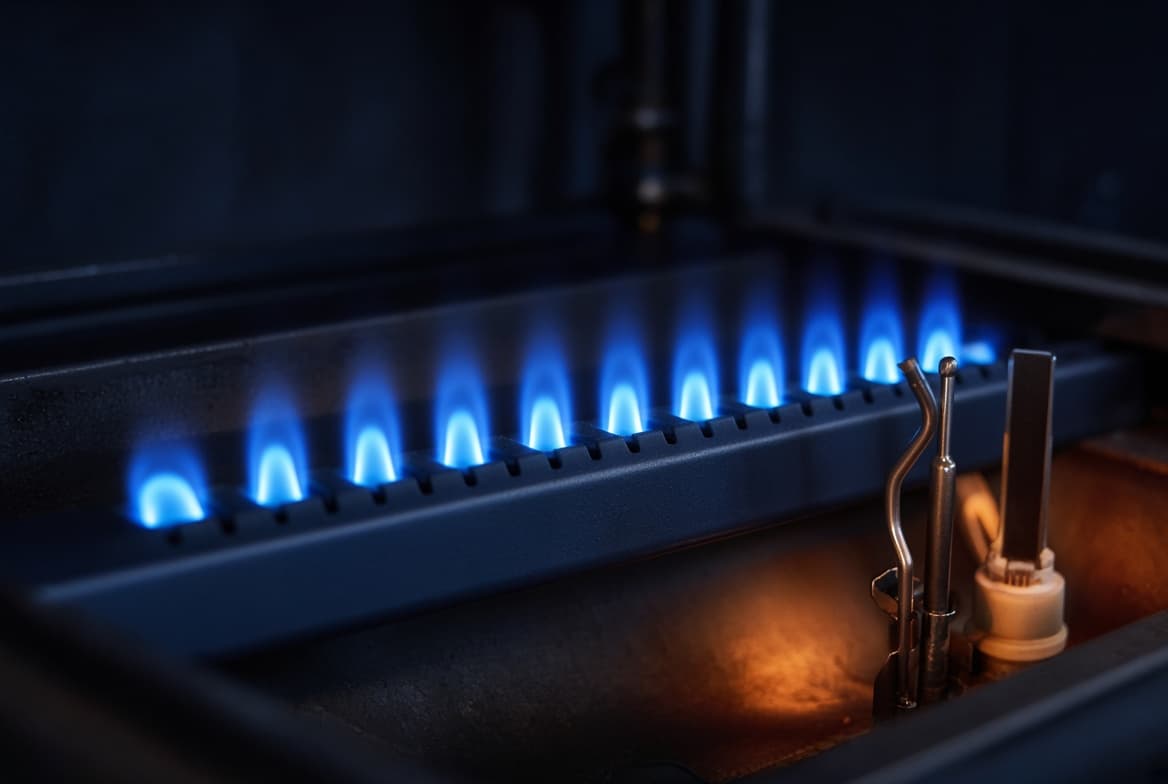
A furnace pilot light is a small, constant gas flame that lights the main burners when the thermostat calls for heat. If it goes out, the furnace can't fire, and you get no heat. On most furnaces with a pilot, you can relight it yourself in a few minutes by following the instructions printed inside the furnace door. If it won't light, or keeps going out, the cause is usually the thermocouple, a dirty pilot, a draft or a gas supply problem, and those are jobs for a technician.
First, Check Whether Your Furnace Has a Pilot Light
Before searching for a pilot to relight, make sure your furnace has one. Most gas furnaces made in roughly the last 30 years don't.
| Ignition type | What you'll see | Can you relight it? |
|---|---|---|
| Standing pilot | Gas valve knob marked OFF / PILOT / ON, small blue flame burning even when the furnace is idle | Yes, following the label |
| Intermittent pilot | A spark lights a small pilot only at the start of each cycle; no knob position for PILOT | No, it relights itself every cycle |
| Hot surface ignitor | A ceramic element glows orange at startup; no flame between cycles | No, there's no pilot. See the furnace ignitor guide |
| Direct spark | A clicking spark lights the main burners directly | No |
If your furnace has an electronic ignition and isn't lighting, a pilot isn't the problem. The furnace not working troubleshooting guide covers those systems.
How a Standing Pilot Works
The pilot burns at the end of a small tube next to the main burners. Beside it sits a thermocouple, a metal probe that generates a tiny voltage when the pilot flame heats it. That voltage holds an electromagnet in the gas valve open. If the pilot goes out, the thermocouple cools, the voltage drops, and the valve closes off the gas to both the pilot and the burners. That's the safety that keeps a dead pilot from leaking gas into the house. The assembly has three parts: the pilot burner (the small hood, sometimes called the pilot head, that the flame comes out of), the pilot orifice that meters the gas, and the thermocouple beside it. A dirty pilot head or orifice gives a weak, yellow or lazy flame that may not heat the thermocouple enough, which ties to the "won't stay lit" section below.
Some furnaces and wall heaters use a thermopile instead, which is a bundle of thermocouples that produces more voltage and can run a millivolt gas valve without household power.
How to Relight a Furnace Pilot Light
The label inside the furnace's access panel, or on the gas valve itself, has the exact steps for your furnace. Read it first; if it differs from the steps below, follow the label.
- Turn the thermostat down so it doesn't call for heat while you work.
- Find the gas control knob on the gas valve and the pilot assembly at the end of the small tube near the burners. You may need to remove an access panel or a small inner cover.
- Turn the knob to OFF and wait at least 5 minutes. This lets any gas that collected clear out.
- Check for gas smell. Sniff around the furnace and near the floor (propane is heavier than air and settles low). If you smell gas, stop here. Don't light anything, don't touch light switches, leave the house and call the gas utility or 911 from outside.
- Turn the knob to PILOT.
- Press and hold the knob (or the separate pilot button) to let gas flow to the pilot.
- Light the pilot. Press the built-in igniter button repeatedly if there is one, or hold a long lighter or fireplace match at the pilot tip.
- Keep holding the knob for the time on the label, commonly about 30 to 60 seconds after the flame appears, so the thermocouple heats up.
- Release slowly. The pilot should stay lit. If it goes out, wait a few minutes and repeat once or twice.
- Turn the knob to ON, replace the panels, and raise the thermostat. The main burners should light from the pilot.
If the pilot won't stay lit after two or three careful tries, stop. Repeated attempts won't fix a worn thermocouple or a blocked pilot.
What a Healthy Pilot Flame Looks Like
This is the part most relighting guides skip, and it tells you a lot. A good pilot flame is:
- Steady and mostly blue, with maybe a slight yellow tip.
- Wrapped around the top of the thermocouple, typically covering the top 3/8 to 1/2 inch of the probe.
- Quiet, not roaring, lifting off the pilot or blowing sideways.
| What you see | Likely cause | Who should fix it |
|---|---|---|
| Small, weak flame barely touching the thermocouple | Dirty or partially blocked pilot orifice, low gas pressure | Technician |
| Lazy yellow or orange flame | Dirty pilot, poor combustion air, possible sooting | Technician; can produce soot and carbon monoxide |
| Flame lifting off or roaring | Gas pressure too high, wrong orifice | Technician |
| Flame bending away from the thermocouple | Draft, or pilot or thermocouple bent out of position | Fix the draft yourself; repositioning is a technician job |
| Flame flickers when the blower starts | Possible heat exchanger or venting problem | Turn the furnace off and have it inspected |
That last row matters. If the pilot or burner flame dances, changes shape or gets blown around the moment the blower comes on, air may be getting into the combustion side through a crack. See cracked heat exchanger for why that's a carbon monoxide concern.
Why a Pilot Light Goes Out or Won't Stay Lit
It won't light at all
- No gas. The furnace's gas shutoff is closed, the utility has shut off service, or a propane tank is empty. If your propane ran out, suppliers commonly leak-check the system before relighting, and many areas require it. Don't relight pilots yourself after a propane run-out.
- Clogged pilot orifice. Dust, spider webs or debris block the tiny opening, especially after a summer with the pilot off.
- Air in the line after gas work, which can take a few tries to purge.
It lights but goes out when you release the knob
- A worn thermocouple. The most common cause. It no longer makes enough voltage to hold the valve open.
- Thermocouple out of the flame. If the probe is bent or the flame is small, it never gets hot enough.
- A loose thermocouple connection at the gas valve.
- A failing gas valve. Less common, but the magnet inside the valve can fail.
It stays lit, then goes out later
- Drafts. Open windows, a nearby door, or a return duct leak close to the burner can blow it out.
- A dirty or weak pilot that's barely hanging on.
- Venting problems. On some older furnaces, a blocked flue or poor draft causes the pilot to go out or trips a safety switch on the draft hood. This needs a technician, because it means exhaust may not be leaving the house.
- Flame rollout when the main burner fires, which can extinguish the pilot and trip a rollout switch.
A thermocouple is an inexpensive part, and replacing one is a routine service call. It involves a fitting at the gas valve, though, so leave it to a technician unless you have experience working on gas controls.
What Not to Attempt Yourself
- Never relight if you smell gas. Leave the house first.
- Don't hold the gas knob open for long periods trying to light a pilot that won't catch. You're releasing gas each time.
- Don't bend, file or drill the pilot orifice. It's sized for a specific gas and pressure.
- Don't bypass the thermocouple or wedge the gas knob down.
- Don't adjust gas pressure or the pilot adjustment screw. That takes a manometer and training.
- Don't relight after a propane run-out without a leak check from the supplier.
Is It Time to Replace a Furnace With a Standing Pilot?
A furnace with a standing pilot is likely decades old and noticeably less efficient than a current furnace, partly because the pilot burns gas around the clock. That doesn't mean it must go; plenty still run safely. But if a pilot problem turns into a larger repair, or the heat exchanger shows signs of wear, it's a good time to compare the repair against furnace replacement cost. The heating repair guide explains how to weigh repair against replacement and what to ask a contractor.
Whatever you decide, keep a working carbon monoxide alarm on every level of the home, and have any fuel-burning furnace inspected once a year.
Frequently Asked Questions
Why does my furnace pilot light keep going out?
The most common causes are a worn or misaligned thermocouple, a dirty pilot orifice that makes the flame too small to heat the thermocouple, drafts near the furnace, and gas supply problems. If the pilot goes out only when the main burner fires or the blower starts, a venting or combustion problem may be the cause, and the furnace should be inspected.
How do I relight my furnace pilot light?
Follow the lighting instructions on the label inside the furnace. The usual steps: thermostat down, gas control knob to OFF, wait at least 5 minutes, knob to PILOT, hold it down while lighting the pilot with the igniter button or a long lighter, keep holding for the time on the label, release, confirm the pilot stays lit, then turn the knob to ON. If you smell gas at any point, stop and leave.
Is it dangerous if the pilot light goes out?
On a working furnace, the thermocouple senses that the pilot is out and the gas valve shuts off the gas, so a pilot going out by itself shouldn't fill the house with gas. The risk comes from a faulty valve or from relighting with gas already in the air. If you smell gas, don't relight. Leave and call the gas utility from outside.
Does my furnace have a pilot light?
If the gas valve has a knob marked OFF, PILOT and ON and you can see a small flame burning when the furnace is idle, you have a standing pilot. Most gas furnaces made in roughly the last 30 years use electronic ignition instead: a hot surface ignitor or a spark that lights the burners only when heat is needed. Those have no pilot to relight.
How long do you hold the pilot button?
Hold it for the time printed on the furnace's lighting label, commonly about 30 to 60 seconds after the pilot lights. That gives the thermocouple time to heat and hold the gas valve open. If the pilot goes out when you release after a full minute, the thermocouple or the pilot flame is the likely problem.
Should I turn off my furnace pilot light in summer?
It's a judgment call. A standing pilot burns a small amount of gas all year, so turning it off saves that fuel. On the other hand, you'll need to relight it in the fall, and some technicians find idle pilots collect spider webs and debris. If you turn it off, plan to relight it, or have it relit during a fall tune-up, before the first cold night.
How do I relight an automatic pilot light?
An automatic (intermittent) pilot is lit by a spark at the start of each cycle, so there is nothing to light by hand. Turn the thermostat down, switch the furnace off at its service switch for a minute, switch it back on and let it try a cycle. If it still will not light, the spark igniter, pilot assembly, flame sensing or control board needs a technician. The furnace not working guide linked above covers those systems.
Is reigniting or resetting a pilot light different from relighting it?
On a standing pilot they are the same procedure: OFF, wait at least 5 minutes, PILOT, light, hold, then ON, as in the relight steps above. Most standing-pilot gas valves have no separate reset button. If the pilot needs relighting more than once, find the cause rather than relighting again.