
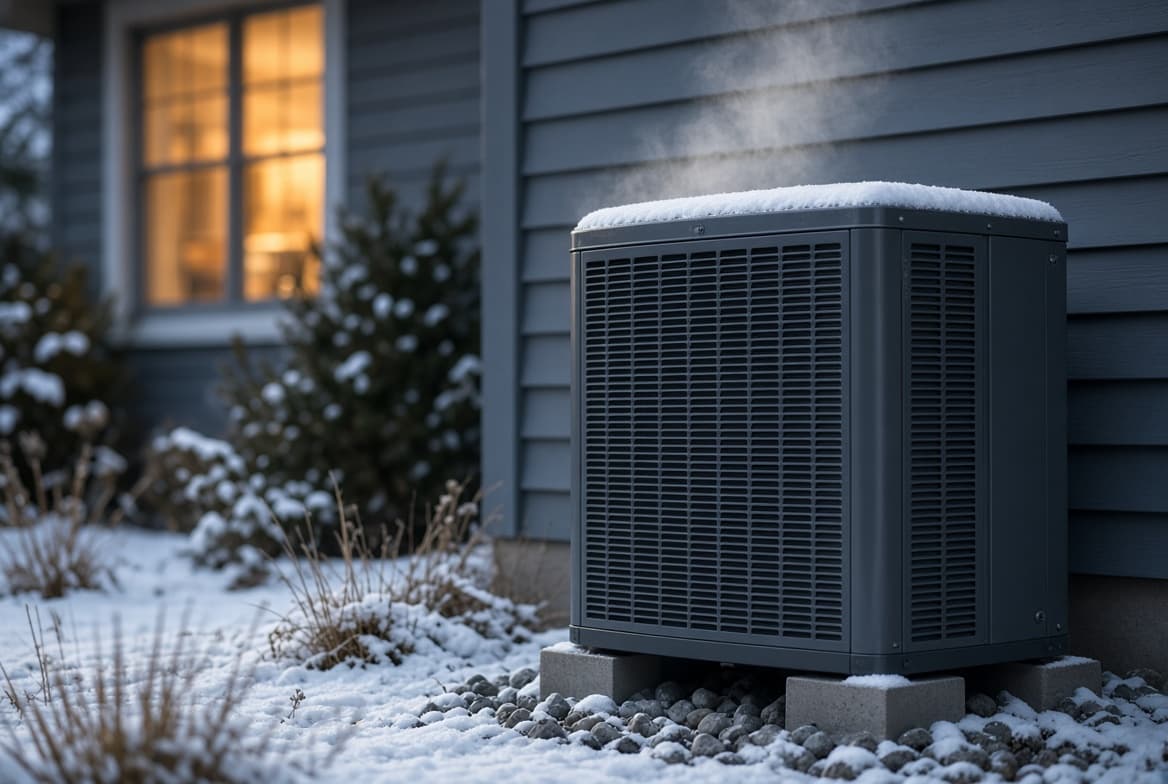
Heat pump maintenance comes down to a few monthly homeowner jobs and one or two professional visits a year. You keep the filter clean, the outdoor unit clear and the condensate drain flowing. A technician tests the electrical parts, checks refrigerant performance, cleans the coils and confirms the reversing valve, defrost cycle and backup heat all work. Because a heat pump heats in winter and cools in summer, it runs far more hours than an air conditioner, and skipped maintenance shows up sooner.
The U.S. Department of Energy's consumer guidance has put the gap in energy use between a well-maintained heat pump and a severely neglected one at 10 to 25 percent. Most of that loss comes from restricted airflow: dirty filters, dirty coils and blocked outdoor units.
Why Heat Pumps Need More Attention Than an AC
A heat pump uses the same core parts as a central air conditioner (see how an air source heat pump works), plus a few that only matter in winter:
- It runs year-round. A heat pump in a mixed climate may log heating and cooling hours in the same week. Capacitors, contactors and motors wear on run time.
- The reversing valve has to shift cleanly between modes. A sticky valve can leave you with cooling when you asked for heat.
- The defrost control and its coil sensor have to clear frost on schedule. If they fail, the outdoor coil turns into a block of ice.
- Backup heat (electric strips or a furnace) only runs on cold days and during defrost, so a failed element or sequencer can go unnoticed until you need it.
- The outdoor unit works in snow, ice and slush, not just summer dust.
That's why a heat pump checklist has winter items an AC checklist doesn't. If you have a separate furnace and AC, the HVAC system maintenance guide covers those.
Heat Pump Preventive Maintenance Checklist: DIY vs Technician
| Task | Who | How often | Why it matters |
|---|---|---|---|
| Check and replace or clean the air filter | Homeowner | Check monthly, replace every 1 to 3 months or per the manufacturer | Low airflow raises head pressure in heating and freezes the coil in cooling |
| Clear leaves, grass, snow and debris from the outdoor unit | Homeowner | Monthly, and after every storm | The coil needs open airflow on all sides and the top |
| Trim plants back about 2 feet | Homeowner | Spring and late summer | Shrubs recirculate discharge air and block service access |
| Rinse the outdoor coil gently | Homeowner | Spring, or whenever it looks dirty | Cottonwood fluff, dust and clippings cut heat transfer |
| Keep supply and return vents open and unblocked | Homeowner | Ongoing | Closing too many vents starves the system of airflow |
| Flush the condensate drain with water or vinegar | Homeowner | Spring and mid-summer | A clogged drain overflows or trips a float switch |
| Check the unit is level and clear underneath | Homeowner | Fall | Defrost water has to drain away, not refreeze around the base |
| Test capacitor, contactor and electrical connections | Technician | Every visit | Weak capacitors and pitted contactors are the most common outdoor unit failures |
| Measure refrigerant performance (superheat, subcooling, temperatures) | Technician | Every visit | Low charge means a leak and cuts capacity in both seasons |
| Clean indoor and outdoor coils thoroughly | Technician | Yearly or as needed | Coil cleaning restores airflow and capacity |
| Check blower, motor amperage and airflow or static pressure | Technician | Yearly | Heat pumps are sensitive to airflow in heating mode |
| Run the system in heat and cool to check the reversing valve | Technician | Yearly | Confirms the valve shifts fully both ways |
| Force a defrost cycle and check the coil sensor | Technician | Fall | Catches a failed defrost board before the first freeze |
| Test backup heat strips or furnace, and outdoor temperature lockouts | Technician | Fall | Confirms backup works and isn't running when it shouldn't |
| Check thermostat settings, including O/B and aux heat staging | Technician | Yearly, and after any thermostat change | A wrong setting can run backup heat all winter |
Spring and Summer Heat Pump Maintenance
Before cooling season, focus on airflow and drainage:
- Shut the power off at the outdoor disconnect and the breaker.
- Clear the unit. Pull out leaves and debris from the top and around the base. Remove any snow guard or cover that was added for winter if it blocks the top.
- Rinse the coil from the top down with a garden hose on a gentle setting. Don't use a pressure washer, and don't bend the thin aluminum fins. If a few fins are flattened, a technician can comb them straight.
- Clear the condensate drain. Find the drain line cleanout near the indoor unit, pour in a cup of water or white vinegar and confirm it flows freely to the drain or outside.
- Swap the filter and confirm the return grilles aren't blocked by furniture. The steps are the same as for a furnace; see how to change your air filter.
- Switch to cooling, and check that cool air reaches every room within a few minutes and that the outdoor fan and compressor both run.
Fall and Winter Heat Pump Maintenance
Fall service is the one that matters most for a heat pump, because winter is when it works hardest and when a failure leaves you on expensive backup heat or none at all.
Before the first cold snap:
- Have the technician force a defrost cycle and test the backup heat. Strips that fail quietly in October become a no-heat call in January.
- Confirm the thermostat is set up for a heat pump, with the right O/B setting and aux heat staging. See emergency heat vs aux heat for how those modes should behave.
- Check that the outdoor unit sits on a pad or stand high enough to stay above typical snow depth. Units in snowy regions are often set on raised stands for this reason.
- Fix any gutter or roof edge that drips onto the unit. Water from above freezes into a cap that defrost can't clear.
During winter:
- Keep snow cleared from around and on top of the unit. Brush it off with a broom, don't chip at ice.
- Watch a defrost cycle once in a while. Frost that builds and then melts off is normal. A solid block of ice that stays through several cycles isn't.
- Know where the emergency heat setting is. If the outdoor unit is iced solid or damaged, switching to emergency heat keeps the house warm until it's fixed.
- Don't cover the unit. A heat pump runs all winter and needs airflow through it.
Cold-climate models face longer run times and more defrost cycles, so fall service is especially worth it on cold climate heat pumps.
Ductless Mini Split Maintenance
Ductless heads have their own filters, usually washable mesh screens behind the front panel. Most manufacturers suggest rinsing them every few weeks during heavy use. Let them dry before putting them back. The indoor coil and blower wheel inside the head collect dust and can grow mold over time, which is a job for a technician with a coil cleaning kit and bag. The outdoor unit gets the same care as a ducted system.
What a Professional Heat Pump Tune-Up Should Include
Ask for a written checklist with readings. A visit worth paying for includes:
- Voltage and amperage at the compressor, outdoor fan and blower
- Capacitor tested against its rated microfarads, not just a visual check
- Contactor inspected for pitting and burned contacts
- Electrical connections tightened, including at the disconnect
- Refrigerant performance measured with gauges or probes, with readings recorded
- Indoor and outdoor coils inspected and cleaned as needed
- Condensate drain, pan and float switch checked
- Temperature split across the indoor coil in heating and cooling
- Reversing valve and defrost operation confirmed
- Backup heat elements, sequencers or furnace checked, along with any outdoor lockout settings
- Thermostat calibration and settings reviewed
Red flags: a "tune-up" that takes 15 minutes, a technician who adds refrigerant without mentioning a leak search, or a visit that ends in a sales pitch for a new system on a heat pump that's running fine.
Some manufacturer warranties require proof of regular professional maintenance or registration. Read yours and keep every service invoice.
Signs Your Heat Pump Needs Service Now
| What you notice | Possible cause |
|---|---|
| Ice on the outdoor coil that doesn't clear | Defrost board or sensor, low refrigerant, fan motor, stuck reversing valve |
| Aux heat on most of the time in mild weather | Outdoor unit down, low charge, thermostat setup |
| Blows cool air in heat mode | Reversing valve, outdoor unit not running, low charge |
| Outdoor unit hums but the fan or compressor won't start | Failed capacitor or contactor |
| Higher electric bills with no change in weather | Dirty coils, low charge, backup heat running too often |
| Water around the indoor unit | Clogged condensate drain |
| Short cycling | Oversizing, low charge, thermostat location, airflow problem |
For what each of these involves to fix, see the heat pump repair guide.
Safety: What Not to Do
- Don't open the outdoor unit's electrical panel. Run capacitors can hold a dangerous charge after the power is off.
- Don't add refrigerant yourself. Refrigerant handling requires EPA Section 608 certification, and a wrong charge damages the compressor.
- Don't chip or pry ice off the coil. The fins and tubing puncture easily. Use emergency heat and let it melt or call for service.
- Don't hose the unit with power on, and never spray into the electrical compartment.
Frequently Asked Questions
How often should a heat pump be serviced?
At least once a year by a technician, ideally in the fall before heating season, because a heat pump runs in both winter and summer. Many manufacturers and contractors suggest twice a year, spring and fall, for systems that run most of the year or in harsh climates. Filter and outdoor unit checks are monthly homeowner jobs.
What does heat pump maintenance include?
The homeowner side is filters, clearing the outdoor unit, rinsing the coil and keeping the condensate drain clear. A technician tests the capacitor, contactor and electrical connections, checks refrigerant performance, cleans the coils and drain, measures airflow, and confirms the reversing valve, defrost cycle and backup heat all work.
Can I do heat pump maintenance myself?
Part of it. You can change filters, clear debris and snow, gently rinse the outdoor coil with the power off, keep vents open and flush the condensate drain. Electrical testing and anything involving refrigerant belong to a technician. Capacitors hold a charge after power is off, and refrigerant work requires EPA Section 608 certification.
Should I cover my heat pump in winter?
No. A heat pump runs all winter and needs open airflow through the coil and the top. Covering it, even partly, starves it of air and traps moisture. Keep snow and ice off and away from it instead. A small roof or overhang a few feet above the unit can shed snow, as long as it leaves the discharge clear.
How do I clean the outdoor unit of my heat pump?
Turn off power at the disconnect and the breaker, clear leaves and debris by hand, then rinse the coil from the top down with a garden hose at low pressure. Don't use a pressure washer, which flattens fins. For heavy dirt, a no-rinse or rinse-type coil cleaner made for HVAC coils works, following the label.
How much does heat pump maintenance cost?
It depends on region, whether it's a single visit or a service plan, how many systems or indoor heads you have, and what's included. A basic inspection costs less than a full cleaning with coil wash and drain service. Ask for the written checklist so you can compare quotes line by line.