
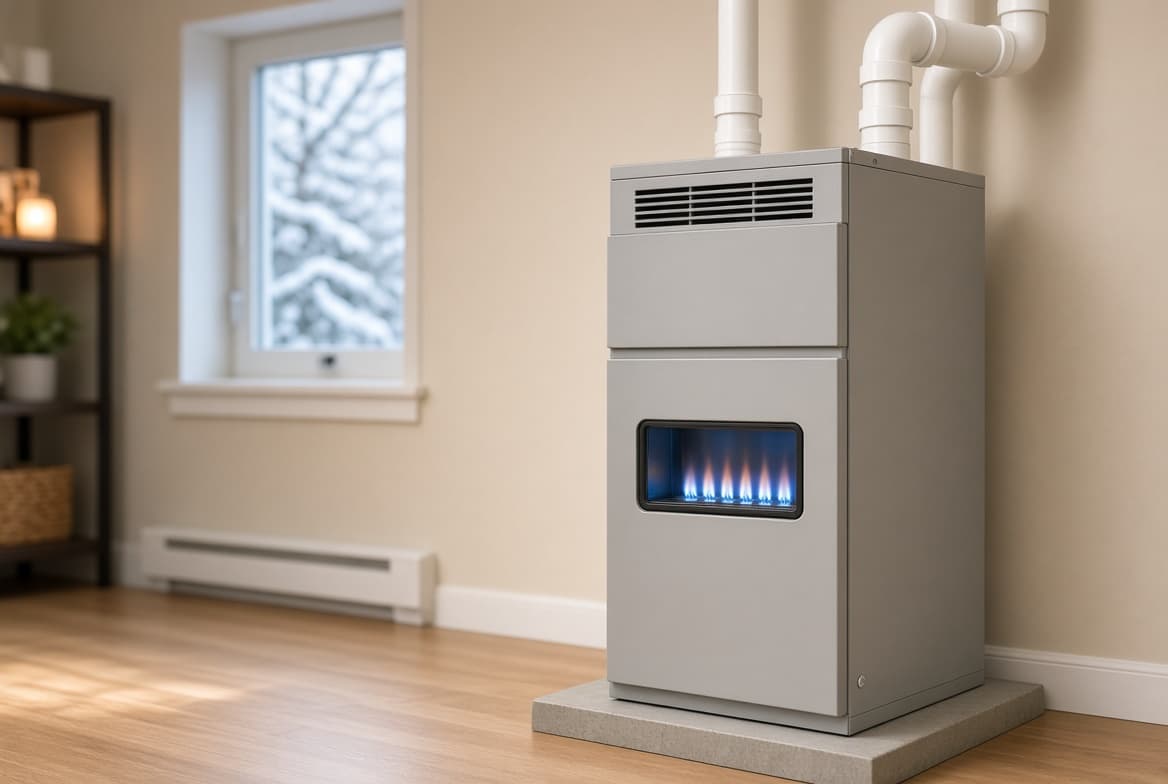
Most gas furnaces last about 15 to 20 years, and a well-installed, well-maintained one can run longer. Electric furnaces often last longer still, commonly quoted at 20 to 30 years, because they have no burners, heat exchanger or venting to wear out. Oil furnaces typically fall around 15 to 25 years. ENERGY STAR suggests considering replacement once a furnace is more than 15 years old.
That range is a guide, not a deadline. A furnace's life usually ends with one decisive problem, most often a cracked heat exchanger or an expensive failure on an older unit, rather than at a set birthday. This guide covers what the numbers say, what wears a furnace out, the warning signs and how to decide when it's time.
How Long Furnaces Last: Average Life Expectancy by Type
| Furnace type | Typical lifespan | Why |
|---|---|---|
| Gas furnace (natural gas or propane) | About 15 to 20 years | The heat exchanger, inducer and ignition parts wear with heat cycles |
| High efficiency (condensing) gas furnace | Similar to standard gas furnaces | More parts to maintain, such as the condensate trap and drain |
| Electric furnace | About 20 to 30 years | No combustion, so fewer parts wear out |
| Oil furnace | About 15 to 25 years | Burner and heat exchanger need regular cleaning |
| Boiler (for comparison) | About 15 to 30 years | Cast iron at the long end |
| Heat pump (for comparison) | About 10 to 16 years | Runs in both heating and cooling seasons |
These ranges come from manufacturer guidance and widely cited references, including Lennox, Angi and the NAHB and Bank of America life expectancy study.
What the sources say
| Source | Furnace lifespan |
|---|---|
| NAHB and Bank of America study (2007) | Gas about 18 years, oil about 20, electric about 15; text says 15 to 20 overall |
| InterNACHI life expectancy chart | Furnace 15 to 25 years |
| Lennox | Gas 15 to 20 years, electric 20 to 30 |
| Angi | Gas and propane 15 to 20 years, oil 15 to 25, electric 20 to 30 |
| ENERGY STAR | Consider replacing after 15 years (a guideline, not a lifespan) |
The sources agree on the core: 15 to 20 years is a fair planning number for a gas furnace. They disagree on electric furnaces, which partly reflects how differently those units are used across climates. The NAHB study is also old and based on first-owner surveys, so treat it as a rough reference.
What Wears a Furnace Out
| Factor | What happens | What helps |
|---|---|---|
| Dirty or wrong filter | Restricted airflow overheats the heat exchanger and trips the limit switch | Change the filter on schedule |
| Oversizing | Short cycling: frequent starts and stops stress the heat exchanger and igniter | Size by heat load calculation at replacement |
| Undersized ducts | High static pressure strains the blower and overheats the heat exchanger | Duct check during installation |
| Skipped maintenance | Dirty burners, weak flame sensors and failing parts go unnoticed | Annual inspection and tune-up |
| Poor installation | Bad venting, wrong gas pressure or poor combustion air | Combustion analysis at startup |
| Damp location | Rust on the cabinet, burners and heat exchanger | Fix moisture problems in basements and crawlspaces |
| Heavy use | Long, cold winters mean more heat cycles each year | Two-stage or modulating units run gentler |
The heat exchanger is the part that matters most for lifespan. It expands and contracts with every heating cycle, and over many years metal fatigue and corrosion can crack it. Overheating from restricted airflow speeds that up. That's why the humble air filter is one of the biggest factors in how long a furnace lasts.
Heat Exchanger Warranties and What They Tell You
Many manufacturers put a much longer limited warranty on the heat exchanger than on the rest of the furnace, often 20 years or a lifetime limited warranty for the original registered owner. That reflects how central that part is. Two things to check on your own furnace: Warranty length and registration rules are one of the clearest differences between makers. Our furnace brands compared guide lays them side by side, and the Goodman reviews cover the best-known budget maker's furnaces and ACs.
- Registration. Some brands reduce warranty coverage if the furnace wasn't registered within a set period after installation.
- What's covered. A heat exchanger warranty usually covers the part, not the labor to replace it, which can be substantial. On an older furnace, the labor alone often makes replacing the whole furnace the better choice.
Signs Your Furnace Is Near the End
- It's past about 15 years old
- Repairs have become a yearly event, or more than one this season
- Heating bills keep climbing with no other explanation
- Rooms heat unevenly, or the furnace runs constantly to keep up
- The burner flame looks yellow or lazy instead of mostly blue on a standard gas furnace
- You see rust, soot or scorch marks around the burners or cabinet
- A technician finds cracks or holes in the heat exchanger
- Your carbon monoxide alarm goes off
Safety first. If a CO alarm sounds, or anyone in the house has headaches, nausea or dizziness that improves when they leave, get everyone outside and call 911 or your gas utility's emergency line from outside. A cracked heat exchanger can let combustion gases into the air stream. Don't run a furnace that a technician has tagged as unsafe, and don't try to patch a heat exchanger yourself.
What Usually Fails vs. What Ends a Furnace's Life
Many no-heat calls aren't the end of the furnace. Knowing the difference keeps you from replacing too soon or repairing too long.
| Problem | Typical outcome |
|---|---|
| Dirty flame sensor, clogged filter, tripped limit switch | Cleaning or a simple fix |
| Failed igniter or thermostat | Inexpensive repair |
| Inducer motor or pressure switch | Moderate repair, worth it on most furnaces |
| Blower motor or control board | Larger repair; weigh against age |
| Gas valve | Larger repair; weigh against age |
| Cracked heat exchanger | Usually replacement, especially out of warranty |
| Rusted-through cabinet or burners | Usually replacement |
Our guide to common furnace repairs covers the fixable problems, and regular furnace maintenance and annual inspections catch many of them early.
How to Find Your Furnace's Age
- Turn off power at the furnace switch and remove the front panel, or look for a label on the outside of the cabinet.
- Find the data plate, a metal or sticker label with the model and serial number.
- Look for a manufacture date. Some plates list it outright.
- Decode the serial number if there's no date. Most brands encode the year, and often the week or month, but each uses its own format.
- Confirm with the manufacturer using the model and serial number.
Installation paperwork, permit records or a sticker from the original installer can also tell you when it went in.
Repair or Replace Your Furnace?
Two rules of thumb get used a lot. Neither is a law.
- The $5,000 rule: multiply the furnace's age by the repair cost. Above $5,000, replacement usually makes more sense. A 16-year-old furnace facing a $400 repair scores 6,400.
- The 50 percent rule: if the repair costs about half the price of a new furnace, replace.
Replace regardless of age if the heat exchanger is cracked. That's a safety issue, not a cost comparison.
When you do replace, it's worth looking at efficiency. An older furnace may be running well below even today's 80 percent federal minimum. Our guide to high efficiency furnace options shows how to estimate fuel savings from a 95 percent model, and furnace cost breakdown covers typical prices and what drives them.
Plan Ahead: Furnace and AC Together
Furnaces and air conditioners often go in together and age together, but air conditioners tend to wear out sooner. If your AC is near the end and the furnace is within a few years of it, replacing both at once can share labor and permits and lets the installer match the furnace blower to the new indoor coil. If the furnace is fairly young, replacing only the AC is fine. See how long an AC unit lasts for the cooling side.
If you heat with hot water or steam instead of forced air, see boiler replacement cost for what that replacement involves.
Federal tax credit rules changed in 2025, so check current federal, state and utility rebates before you count on one.
How to Make Your Furnace Last Longer
- Change the filter every one to three months during the heating season, more often with pets
- Keep supply registers and return grilles open and clear
- Book an annual inspection before the heating season, including a heat exchanger and venting check
- Keep the area around the furnace clear and dry
- Keep the outdoor intake and exhaust pipes clear of snow on a high efficiency furnace
- Test carbon monoxide alarms monthly and replace them at the end of their rated life
- Fix short cycling, odd noises or ignition problems promptly instead of living with them
Frequently Asked Questions
How long does a gas furnace last?
Most gas furnaces last roughly 15 to 20 years. Manufacturers such as Lennox and cost guides such as Angi quote that range, and a well-installed, well-maintained furnace can go longer. Poor sizing, dirty filters, short cycling and skipped maintenance shorten it.
Should I replace a 20-year-old furnace?
If it needs a major repair, almost always. At 20 years a furnace is past the typical range, it's likely far less efficient than a new one, and parts such as the heat exchanger are near the end of their life. If it still runs safely, have it inspected every year and plan the replacement before it fails in winter.
Can a furnace last 30 years?
Some do, especially electric furnaces, which have fewer parts that wear out, and simple older gas furnaces in mild climates. But a 30-year-old gas furnace should be inspected yearly for heat exchanger cracks and venting problems, because the risk of carbon monoxide issues rises with age.
How do I know how old my furnace is?
Check the data plate inside the furnace's front panel. Some list the manufacture date. If not, the serial number usually encodes the year, but each brand uses its own format, so check the manufacturer's website or call them with the serial number.
What is the most common reason a furnace stops working?
Many no-heat calls come from fixable problems: a clogged filter, a dirty flame sensor, a failed igniter, a tripped limit switch or a thermostat issue. What usually ends a furnace's life is a cracked heat exchanger or a major component failure on an older unit.