
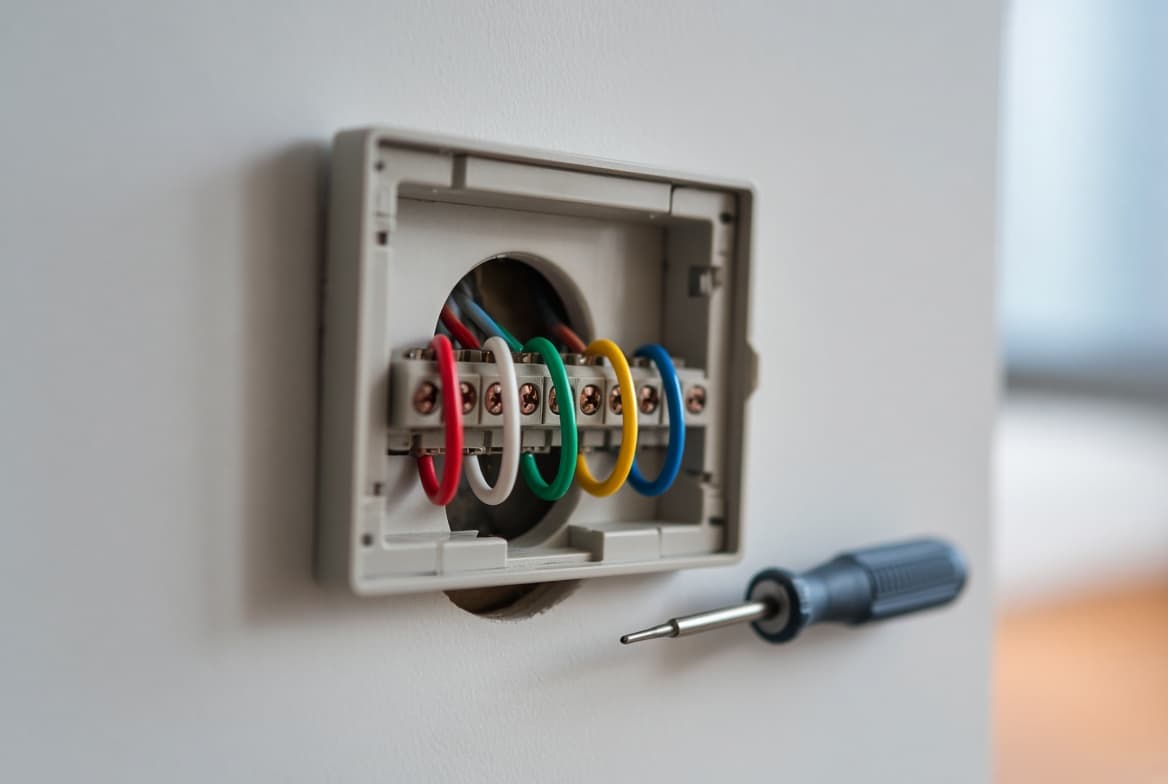
Nest vs ecobee comes down to your HVAC system and your smart home. The Nest Learning Thermostat (4th gen) supports more heating and cooling stages and usually runs without a C wire. ecobee's Premium and Enhanced ship with a kit that solves a missing C wire, and ecobee's room sensors detect occupancy as well as temperature. Google Home users tend to be better served by Nest, while Apple Home and Alexa users often prefer ecobee.
This comparison is built from Google's and ecobee's published specs, support pages and installer guides. We did not test either thermostat. Prices are list prices at the time of writing (October 2026) and change often, including frequent sales.
Nest vs Ecobee at a Glance
| Model | List price | Remote sensor | Heat pump support | Conventional support | C wire | Platforms |
|---|---|---|---|---|---|---|
| Nest Learning Thermostat (4th gen) | $279.99 | Nest Temperature Sensor included (temperature only) | Up to 3 stages plus 1 or 2 aux/emergency stages | Up to 3 heat, 3 cool | Works without one in most homes | Google Home, Matter |
| Nest Thermostat (2020) | $129.99 | Not supported | 1 stage plus aux or emergency heat | 1 heat, 1 cool, plus a second stage of either | Needed for heat pump, heat-only, cool-only and zoned systems | Google Home, Alexa, Matter |
| ecobee Smart Thermostat Premium | $259.99 | SmartSensor included (temperature and occupancy) | 2 heat, 2 cool, plus 2 aux stages | 2 heat, 2 cool | C wire or included Power Extender Kit | Alexa built in, Apple Home, Google |
| ecobee Smart Thermostat Enhanced | $199.99 | SmartSensor sold separately | 2 heat, 2 cool, plus 1 aux stage | 2 heat, 2 cool | C wire or included Power Extender Kit | Apple Home, Alexa, Google, SmartThings |
| ecobee Smart Thermostat Essential | $139.99 | Check current sensor compatibility | 2 heat, 1 cool | 2 cool and 1 heat, or 2 heat and 1 cool | C wire, or kit bought separately | Apple Home, Alexa, Google |
The older Nest Learning Thermostat 1st and 2nd gen lost app support on October 25, 2025. They still work from the device itself, but if you own one, you're choosing a replacement either way.
Room Sensors: Temperature Only vs Temperature and Occupancy
Remote sensors are the clearest hardware difference.
- Nest Temperature Sensor (2nd gen) reads temperature only. You can add up to six per thermostat. It works with the Learning Thermostat (3rd and 4th gen) and the Nest Thermostat E, but not the 2020 Nest Thermostat. The 4th gen Learning Thermostat includes one in the box.
- ecobee SmartSensor reads temperature and occupancy, with a 20-foot motion detection range and up to 60 feet from the thermostat. ecobee lists battery life up to five years. It's included with the Premium.
Occupancy matters because ecobee can average only the rooms that are occupied, so the bedroom gets priority at night and the office during the day. A Nest sensor can do the same thing on a schedule you set, but it doesn't know whether anyone is in the room. Neither brand's sensors work with the other brand's thermostats.
Best Thermostat for a Heat Pump
Heat pumps need more from a thermostat than a furnace does: an O/B reversing valve setting, control of electric backup heat, and ideally a way to keep backup heat off unless it's actually needed.
Nest offers Heat Pump Balance on the Learning Thermostat (4th gen) and the 2020 Nest Thermostat. It sets the auxiliary heat lockout automatically, with Max Comfort (the default), Balanced and Max Savings modes, or you can turn it off and set a manual lockout temperature. It needs Wi-Fi and both O/B and W2/AUX wires connected, and it isn't available on dual-fuel systems. Nest thermostats use internet weather data rather than an outdoor sensor.
ecobee uses two adjustable outdoor-temperature settings: a compressor minimum outdoor temperature, below which the heat pump stops, and an aux heat maximum outdoor temperature, above which backup heat won't run. ecobee says its thermostats work with multi-stage and dual-fuel heat pumps. The Premium supports two aux stages, the Enhanced one.
Dual fuel. Google's Nest Pro configuration guide covers dual-fuel setups on both current Nest models using a manually set breakpoint temperature, and Google recommends professional installation for dual fuel. ecobee lists dual-fuel heat pumps as compatible.
Which to pick for a heat pump:
| Your heat pump system | Strongest fit | Why |
|---|---|---|
| Single-stage with one stage of aux heat | Any of the five models | All handle O/B and one aux stage |
| Two-stage with electric strips in two stages | Nest Learning (4th gen) or ecobee Premium | Both support two aux stages |
| Three-stage compressor | Nest Learning (4th gen) | Up to three heat pump stages |
| Dual fuel with a gas furnace | ecobee Premium or Enhanced, or Nest with a pro setup | Both support it; Nest's Heat Pump Balance doesn't apply |
| Variable-speed with a brand communicating control | The manufacturer's own control | A 24V thermostat usually runs it as a staged system |
That last row is the one most comparisons miss. Many variable-speed systems from Trane, Carrier and Lennox are designed around the brand's communicating thermostat, and some models require it. Wired to a conventional 24-volt thermostat, they typically lose part of their modulation. Check the equipment's installation guide before buying either brand. Our heat pump brand comparison guide notes which flagships need their own control.
Wiring and C-Wire Compatibility
Both brands publish online compatibility checkers, and you should run one before buying. The key differences:
- Nest uses push-in connectors and can draw power through other wires on many systems. Google says the 4th gen Learning Thermostat needs a C wire or its Nest Power Connector in under 1% of homes, while both Nest models list heat pump, heating-only, cooling-only and zoned systems as needing one.
- ecobee needs a C wire or its Power Extender Kit, which mounts at the furnace and frees up a wire. The kit comes with the Premium and Enhanced but not the Essential, and it needs at least four wires at the thermostat.
Our thermostat C wire guide covers every option if you don't have one, and the thermostat wiring guide explains each terminal.
Energy Savings Claims, Compared Fairly
Both brands advertise savings, but the numbers aren't measured the same way:
- Google says the Nest Learning Thermostat can save up to 31% on heating and cooling, measured against holding 72°F year-round, and notes actual savings will likely be less. Google also cites two independent 2015 studies across 41 states that found average savings of 12% on heating and 15% on cooling bills.
- ecobee says the Premium and Enhanced can save up to 26% (up to 23% for the Essential), also compared with a constant 72°F hold, based on its own 2021 analysis of customers.
Neither figure tells you what you'll save. Your savings depend mostly on how much you set back temperatures when away or asleep, your climate, and your equipment. For heat pump owners, how often electric backup heat runs often matters more than the thermostat brand, which is why the lockout settings above are worth getting right.
Smart Home, App and Subscriptions
- Google Home households: Nest is native, and both current Nest models are Matter-certified.
- Apple Home households: ecobee has long supported HomeKit, and Siri control needs an Apple home hub.
- Alexa households: the ecobee Premium has Alexa built in, and the 2020 Nest Thermostat lists Alexa voice control.
- Subscriptions: core thermostat features on both brands need no subscription. ecobee's Smart Security plan adds home-monitoring features to the Premium.
Which Should You Buy?
- Simple one-stage furnace and AC, tight budget: Nest Thermostat (2020) or ecobee Essential.
- Rooms that run hot or cold, people home at different times: ecobee Premium, for occupancy sensing.
- Multi-stage or three-stage equipment: Nest Learning Thermostat (4th gen).
- No C wire and four or more wires: ecobee Premium or Enhanced with the included kit, or a Nest model if your system type allows it.
- Heat pump with backup strips: Nest Learning (4th gen) or ecobee Premium.
For more picks, see our best smart thermostat picks, and for a primer, what a smart thermostat does. If the wiring is unclear or you have a heat pump, zoning or dual fuel, a professional thermostat installation is the safer route.
Frequently Asked Questions
Is Nest or ecobee better?
It depends on your system and your smart home. The Nest Learning Thermostat (4th gen) supports more heating and cooling stages and works without a C wire in most homes. ecobee's Premium and Enhanced include a Power Extender Kit for homes without a C wire, and ecobee's SmartSensor detects occupancy as well as temperature. Google Home households tend to lean Nest; Apple Home and Alexa households often lean ecobee.
What is the best thermostat for a heat pump?
For a conventional heat pump with electric backup heat, the Nest Learning Thermostat (4th gen) and ecobee Smart Thermostat Premium handle the most stages: up to three heat pump stages plus two aux stages on the Nest, and two stages plus two aux stages on the ecobee Premium. Variable-speed heat pumps that rely on the manufacturer's communicating control are best run with that control.
Do ecobee sensors work with Nest?
No. ecobee SmartSensors pair only with ecobee thermostats, and Nest Temperature Sensors pair only with supported Nest thermostats. The 2020 Nest Thermostat doesn't support any remote sensor.
Does Nest or ecobee need a C wire?
Nest thermostats are designed to run without a C wire on many systems, though Google lists heating-only, cooling-only, zone-controlled and heat pump systems as needing a C wire or the Nest Power Connector. ecobee thermostats need a C wire or the Power Extender Kit, which comes with the Premium and Enhanced but not the Essential.
Is the Nest Learning Thermostat worth it over the Nest Thermostat?
If you have a heat pump with more than one stage, a multi-stage furnace or AC, or want room sensors, yes. The 2020 Nest Thermostat supports a single-stage heat pump with aux or emergency heat and no remote sensors. For a simple one-stage furnace and AC, the cheaper model covers the basics.