
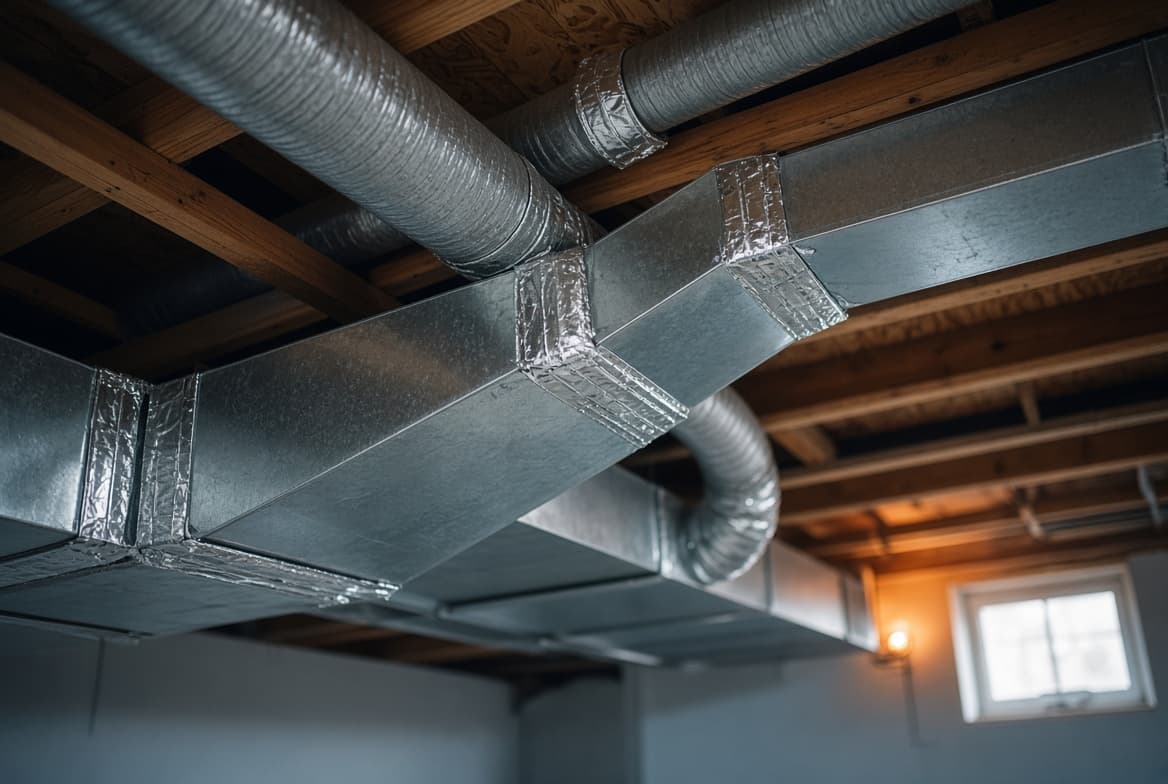
Air duct cleaning is worth it in a few specific situations, not as routine maintenance. The EPA's guidance on duct cleaning says it has not been shown to prevent health problems, and it recommends considering it when there is substantial visible mold growth, a vermin infestation, or ducts clogged with excessive dust and debris that is being released into the home. In those cases, a proper cleaning that follows the NADCA standard helps. For ordinary household dust, a better filter and sealed ducts usually do more.
Is Air Duct Cleaning Worth It?
The case for cleaning is strongest when you can point to a specific problem. The EPA's guidance on duct cleaning makes a few points that are useful when you are weighing a quote:
- Light dust on the inside of ducts is normal and mostly sticks to the duct walls rather than blowing into your rooms.
- Duct cleaning has not been shown to prevent health problems, and research has not shown that dust levels in homes go up because ducts are dirty.
- Cleaning is worth considering for substantial visible mold, rodents or insects in the system, or ducts clogged with debris that is coming out of the registers.
- If the system's coil, blower and drain pan are not cleaned too, cleaning only the ducts does little, because those components can recontaminate everything downstream.
- Mold comes back unless the moisture that caused it is fixed.
NADCA, the National Air Duct Cleaners Association, publishes the ACR standard, which describes how HVAC systems should be assessed, cleaned and verified. A company that follows it is a good sign.
Duct Symptoms and Whether Cleaning Fixes Them
| Symptom | Likely cause | Does cleaning fix it? |
|---|---|---|
| Dust on furniture soon after cleaning the house | Normal household dust, leaky return ducts pulling attic or crawlspace dust, a low-grade or loose filter | Usually not. Seal the returns and upgrade or reseat the filter. |
| Puff of dust from registers when the system starts | Heavy debris in the ducts, construction dust, a leaky return | Often yes, if an inspection confirms debris. Seal leaks too. |
| Musty smell when the system runs | Mold or biofilm on the coil, drain pan or ducts, wet insulation, high indoor humidity | Partly. Cleaning removes growth, but the moisture source has to be fixed first. |
| Visible mold inside ducts or on the blower | Condensation, a leaking drain pan, humid air in the ducts | Yes, on hard metal ducts once the moisture is fixed. Moldy fiberglass duct board or lined ducts usually need replacement. |
| Visible debris, drywall dust or insulation in the ducts | Renovation with open registers, a disconnected or torn duct | Yes, after the damaged duct is repaired. |
| Droppings, nesting material or a dead-animal odor | Rodents or insects getting in through gaps | Yes, along with sealing entry points and replacing damaged duct sections. |
| Uneven airflow, some rooms hot or cold | Disconnected, crushed or leaky ducts, closed dampers, poor duct design | Rarely. This needs duct repair, sealing or redesign. |
| Allergy symptoms at home | Many possible sources | No evidence cleaning alone helps. Focus on filtration, humidity and source control. |
What You Can Safely Check Before Calling Anyone
- The filter. Check it and replace it if it is loaded, the wrong size or leaving gaps around the edges. Air bypassing a loose filter carries dust straight into the system. See how to change your furnace filter.
- Behind a register. Unscrew a supply register and a return grille and look in with a flashlight or a phone camera. A thin film of dust is normal. Clumps, debris, droppings or dark growth are worth a professional inspection.
- Registers and grilles. Wash the covers and vacuum as far into the opening as you can reach. That is a reasonable homeowner job.
- Accessible ducts. In a basement, attic or crawlspace, look for disconnected joints, crushed or torn flex duct and gaps around boots.
- Humidity. A cheap hygrometer tells you if indoor humidity sits above about 50 percent, which feeds mold. If it does, whole house dehumidifiers and a drain check come before any cleaning.
- The blower compartment. With power off at the furnace switch, you can shine a light on the blower wheel. A wheel caked in dust means the system needs cleaning, not just the ducts.
What not to do. Do not fog or spray disinfectants, deodorizers or "duct treatments" into the system. Do not sweep or dry-vacuum rodent droppings, which can put harmful particles in the air; wet them with disinfectant first, or leave heavy contamination to a professional. In older homes, do not disturb old duct wrap, tape or insulation that might contain asbestos until it has been tested. Leave the burner compartment and electrical parts of a gas furnace alone.
What a Proper Air Duct Cleaning Involves
A real cleaning is a full-system job, not a shop vacuum at each register:
- Inspection. The technician looks inside the ducts and the air handler, often with a camera, and documents what is there.
- Negative pressure. A powerful collection vacuum, either truck-mounted or a portable HEPA-filtered unit, is connected to the main trunk so the whole duct system is under suction. Registers are covered so loosened debris flows to the collector rather than into the house.
- Agitation. Rotary brushes, air whips or compressed-air tools work through each branch to break debris loose, supply and return sides both. Flex duct and duct board need gentler tools than sheet metal.
- Registers and grilles. Covers are removed and cleaned.
- Blower and coil. The blower wheel, blower compartment, evaporator coil and drain pan are cleaned or, where access is limited, at least inspected with the coil cleaning quoted separately.
- Access holes. Any holes cut in the trunk for access are closed with sheet metal patches and sealed, not taped.
- Verification. You should get before and after photos or a look through the camera.
What Drives Air Duct Cleaning Cost
The price depends on the scope more than anything:
- The size of the home and the number of supply and return registers
- How many HVAC systems and air handlers there are
- Duct material and access, such as tight crawlspaces or hot attics
- The level of contamination, since mold remediation and rodent cleanup are priced as larger jobs
- Whether the blower, coil and drain pan are included or quoted separately
- Add-ons such as dryer vent cleaning, coil cleaning or an EPA-registered biocide when one is actually needed
- Repairs to damaged ducts found during the job
A whole-house price that seems far below every other quote usually means a register-only job or a plan to upsell once the crew is inside. Compare quotes line by line on what is included. For typical whole-house and per-vent prices, see our duct cleaning cost guide.
Clean, Seal or Replace Your Ducts?
Clean when there is heavy debris, vermin contamination, or mold on hard metal ducts and the moisture problem is solved.
Seal (see the duct sealing guide) when the issue is dust from leaky returns, rooms that do not get enough air, or high energy bills. Leaky ducts in attics and crawlspaces pull in dusty air and waste conditioned air, so sealing often does more for dust and comfort than cleaning. Sealing can be done with mastic at accessible joints or with an internal aerosol sealing process for ducts that are hard to reach.
Replace when fiberglass duct board or internally lined duct is wet or moldy, since the EPA's guidance notes these materials generally cannot be cleaned effectively. Replacement also makes sense for crushed, torn or rodent-damaged flex duct, or a duct layout that never delivered enough air. See what ductwork replacement involves and the ductwork installation cost guide.
How to Vet an Air Duct Cleaning Company
Questions to ask:
- Are you a NADCA member, and do you have certified technicians on the job?
- Do you follow the NADCA ACR standard?
- Do you use negative pressure with a truck-mounted or HEPA-filtered collector?
- Will you clean both supply and return ducts, the blower, coil and drain pan?
- How will you seal any access holes?
- Will you show me before and after photos, and give me a written, itemized scope?
- Are you insured?
Red flags:
- Very cheap "whole house" specials, especially from robocalls or mailers.
- Scare tactics about mold, or calling something mold without offering a lab test.
- Pushing biocides, sanitizers or duct sealants without a specific, documented reason.
- Promises that cleaning will cure allergies or cut energy bills dramatically.
- Cleaning only at the registers with a portable vacuum.
Duct cleaning is not a substitute for regular filter changes and routine HVAC maintenance, which keep the coil and blower clean in the first place.
Frequently Asked Questions
Is air duct cleaning worth it?
Only for specific problems. The EPA's guidance on duct cleaning is that it has not been shown to prevent health problems, and it recommends considering cleaning when there is substantial visible mold growth, a vermin infestation, or ducts clogged with excessive dust and debris that is being released into the home. Without one of those, a better filter and sealed ducts usually do more.
How often should air ducts be cleaned?
There is no fixed schedule that applies to every home. Clean when an inspection finds heavy debris, mold or signs of rodents or insects, and consider an inspection after major renovation work or when you move into a home with an unknown history. Keeping up with filter changes is what keeps ducts clean between cleanings.
Can dirty air ducts make you sick?
Ordinary dust on duct walls mostly stays put and has not been shown to cause health problems. Mold growing in the system or rodent contamination is different, and those are the cases where cleaning, along with fixing the moisture source or sealing out the pests, makes sense.
How do I know if my air ducts have mold?
Signs include a musty smell when the system runs and dark growth on the coil, the blower or inside the ducts near the registers. Not everything that looks like mold is mold, so a lab test of a sample is the way to confirm it before paying for remediation.
Is air duct cleaning a scam?
The service itself is legitimate, but the industry has a known problem with very cheap whole-house specials that turn into upsells once the crew is inside, and with scare tactics about mold. Hire a company that follows the NADCA cleaning standard and gives you a written, itemized scope.
How long does air duct cleaning take?
A proper cleaning of a typical single-system home takes a few hours to most of a day. Larger homes, multiple systems and heavy contamination take longer. A crew that finishes a whole house in an hour is not doing the job the cleaning standard describes.